This article originally appeared in the magazine Elektriala and on the web portal elektriala.ee.
Teet Kukk, Head of Soleron Energy, explains why the next stage of development in the energy market is based on system flexibility and smart management. The European energy market has changed faster in recent years than ever before, and the adopted clean energy package will affect the entire sector for decades to come. The continuous growth of renewable energy, unexpected price fluctuations, and the rapid development of reserve markets have brought battery storage into a completely new role.
With batteries seen primarily as backup power or local energy storage tools just a few years ago, the focus has now shifted to virtual power plants. Has the view of batteries simply as energy storage units become outdated?
Clearly, yes. Today, the true value of a battery system is no longer determined solely by how many MWh of energy it can hold. The device’s response speed and ability to skillfully direct energy have become far more significant arguments. A well-configured storage solution allows for participation in balancing markets, engaging in arbitrage, and reducing peak loads at the connection point.
There is a lot of talk about frequency containment, especially recently. How does this affect the use of batteries?
Following the Baltic states’ departure from the Russian frequency zone and synchronization with the continental European power grid, maintaining frequency has become our own independent responsibility. Consequently, the ultra-fast response capabilities of batteries have turned them into a critical resource in frequency containment and restoration reserve markets. A passive energy storage unit has become an active market resource, and local grid operators have already launched projects to use storage systems for load balancing.
What has fundamentally changed in the entire electricity system for this level of flexibility to be needed so much now?
The biggest shift in the entire system lies in the fact that the market is no longer based solely on predictable generation. Now, in addition to production, consumption and grid capacity must be forecast with extreme precision. A good example is our own local market. Today, the installed solar energy capacity in Estonia is approximately 1500 MW, while summer peak consumption reaches up to 900 MW. This means that on a clear summer day, more electricity is occasionally produced than the entire country can consume at that exact moment. The choice here is whether to export or store. Since this type of generation is highly volatile, the power grid must react many times faster to maintain balance.
How do virtual power plants contribute here, and does Soleron plan to introduce its own service?
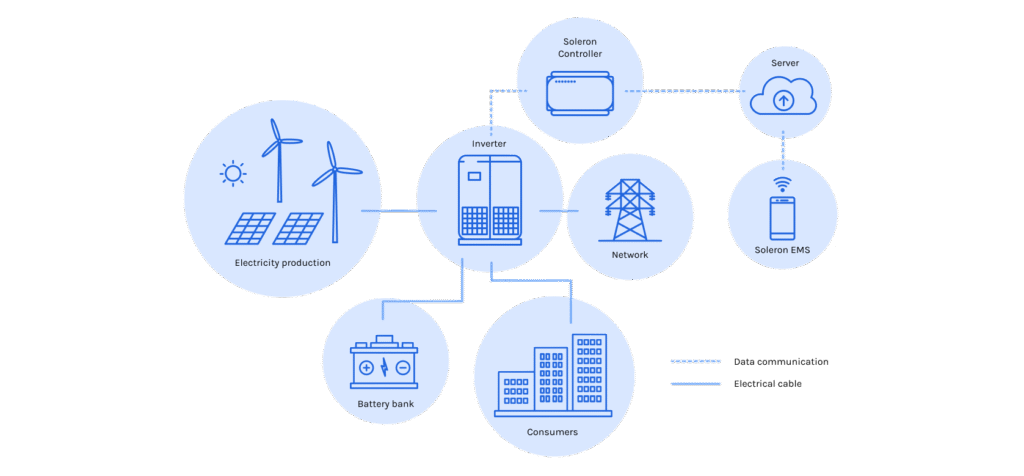
Virtual power plants help aggregate different assets into a single portfolio, which significantly reduces the imbalance risk across the entire chain. As a result, expectations for solar and battery parks have clearly grown. Soleron plans to launch its comprehensive virtual power plant solution this coming autumn. This kind of system is critical because it enables the integration of distributed energy generation and storage assets into one large, intelligently managed whole. It provides vital support to the grid and resolves overload issues, while offering asset owners more secure revenue opportunities. Flexible management creates value for all parties and lowers the risk costs for electricity sellers in the long run.
Every energy system represents a significant investment for the asset owner. Does battery storage actually pay off right now?
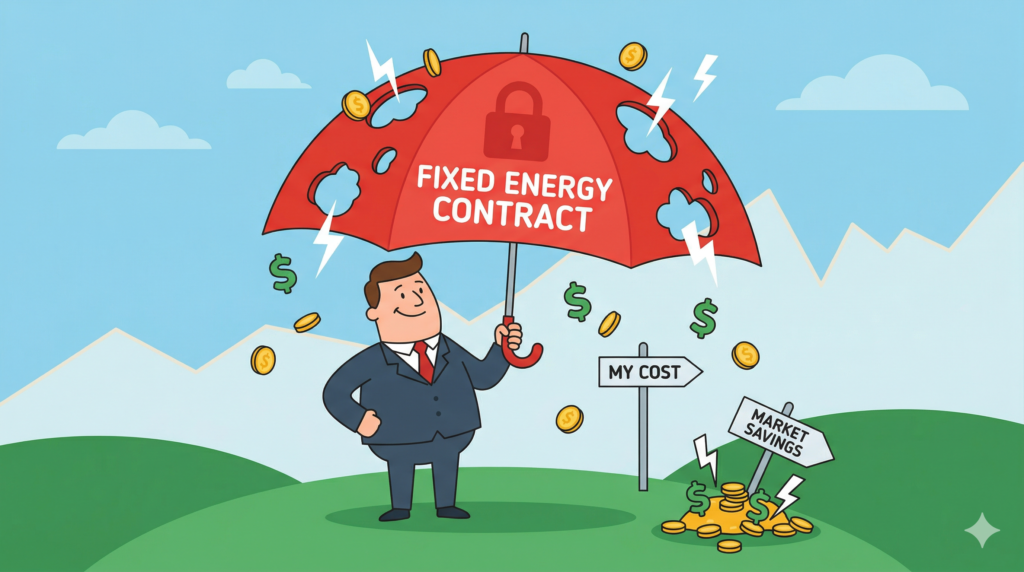
Profitability depends directly on how the system is utilized. Relying solely on daily price arbitrage tends to yield limited returns, as the daily and nightly price differences on the Estonian market are not always large enough to ensure a quick return on a substantial investment. Significantly better revenue streams are offered by the mFRR and aFRR reserve markets. True financial value is unlocked only when participating in multiple markets simultaneously. This concept is known as revenue stacking. It means that a single device generates income from several different sources at the same time. This software-driven multi-market optimization shortens the payback period of the storage system noticeably.
Soleron has grown very rapidly in the reserve markets. How has this development unfolded over the past year?
We entered the reserve markets with our management solution in May 2025. At that time, we started with a capacity of 1 MW and offered only mFRR balancing services. That was a massive step for us. Today, the Soleron platform features approximately 25 MW of flexible capacity and around 100 MWh of storage volume. In addition to batteries, we can provide market access to demand-side response assets, hybrid solutions, and systems linked to renewable energy generation. The foundation for everything, of course, is the willingness of the connection point owner to actively manage their production and consumption.
Which markets are you actively participating in right now, and what is the next major technological goal?
Currently, we participate in the mFRR capacity market and balancing market, possess the capability to participate in the aFRR capacity market and balancing market, and are working on adding FCR services. The ultimate challenge is to achieve the capability to participate in all markets simultaneously. Across the industry, this is referred to as multi-market optimization, and it will undoubtedly become the most vital element of our service design.
Many owners fear losing control over their systems. How can this concern be addressed?
Continuous oversight and control are critical for the owner. Good management software does not operate as a closed system; instead, it offers complete transparency. The asset owner must be able to see in real time which markets are being entered, how much capacity is being used, and what revenue is actually being generated at any given moment.
A variety of equipment is offered on the market. How critical is the interoperability between hardware and software?
Successful market participation requires flawless cooperation between devices. Value is increasingly shifting from hardware to software and flexible control. If a storage system cannot be managed as required, or lacks the technical capability to participate in different markets, the entire investment loses its original purpose. In practice, batteries from unknown brands often cause major headaches for operators. The lack of technical documentation makes interfacing these devices a complicated challenge.
How has Soleron mitigated these technical risks?
Interfacing unknown batteries is often difficult in practice and causes unnecessary headaches for operators. To avoid technical risks, we have already pre-integrated CNTE Star series equipment with our platform. A prime example is the Star H Plus model, which offers 125kW/261kWh of storage capacity. Since CNTE is backed by CATL, the world’s largest battery cell manufacturer, these solutions rely directly on state-of-the-art battery technology.
For the asset owner, this prior software integration means a seamless rollout and absolute system reliability. A comprehensive solution, from installation to real-time market trading, must be maximally secure and continuously monitored. The next major leap forward in the energy market is indeed based on system automation and the ability to always direct energy where it generates the most value.