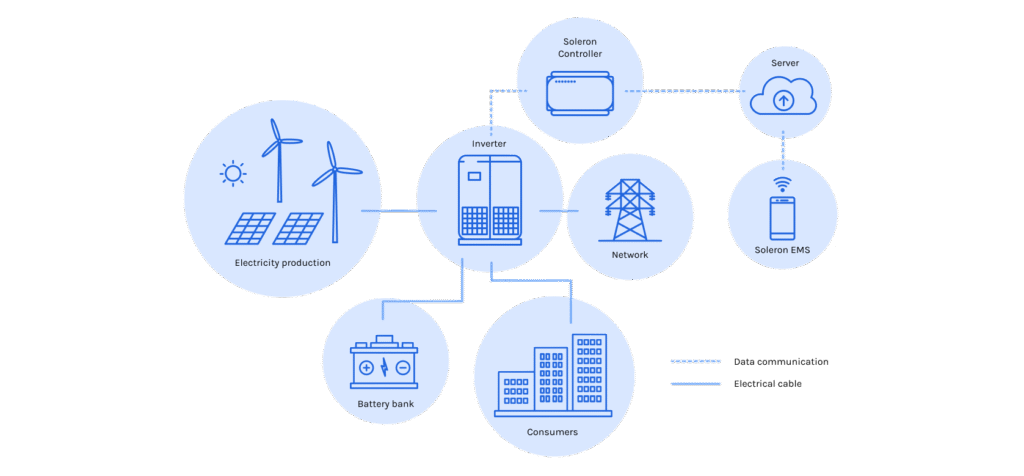
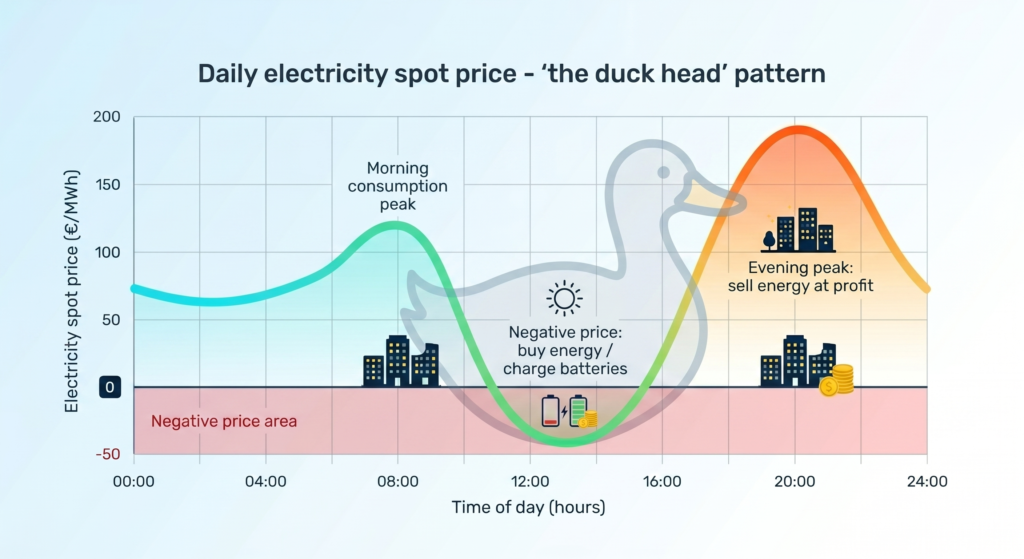
Spring brings a change to the electricity production and consumption profile. The exchange price graph has changed and now resembles a duck in its shape. This means that prices are high in the mornings and evenings but drop close to zero or even into the negative during midday.
The approaching summer means more frequent negative electricity prices. For the average consumer, this brings pleasantly small bills. Owners of solar parks and wind turbines must, however, decide how to sell their production at a profit.
Unfortunately, a small producer without a battery is in a losing position in such a market situation if they cannot consume all the generated electricity themselves. In 2025, an estimated thousands of hours occurred in Europe where the electricity price was near zero or negative, and this trend has reached Estonia too.
What is a negative electricity price, and why does it occur?
A negative electricity price occurs when more electricity is produced than can be consumed. The share of renewable energy is large, and new plants are constantly being added. When the sun shines and the wind blows, but consumption is low, a surplus is created in the grid.
It would make sense to export the surplus to neighbors, but usually, they also have enough energy at the same time, and there is nowhere to put the surplus. A negative exchange price is a signal that no more electricity is needed on the market. The market is willing to pay those who are ready to consume electricity.
Here, it should be noted that to earn a profit, the negative price must be greater than the added grid fees and taxes. Real profit from consumption is only earned when the negative price covers all associated costs.
How this affects the solar park owner
A solar park without a battery faces a choice of whether to pay extra to feed into the grid or to shut down the plant entirely. In both cases, potential income is lost, and the return on investment period lengthens. Without smart management, a solar park becomes a source of expenses during summer days with high production.
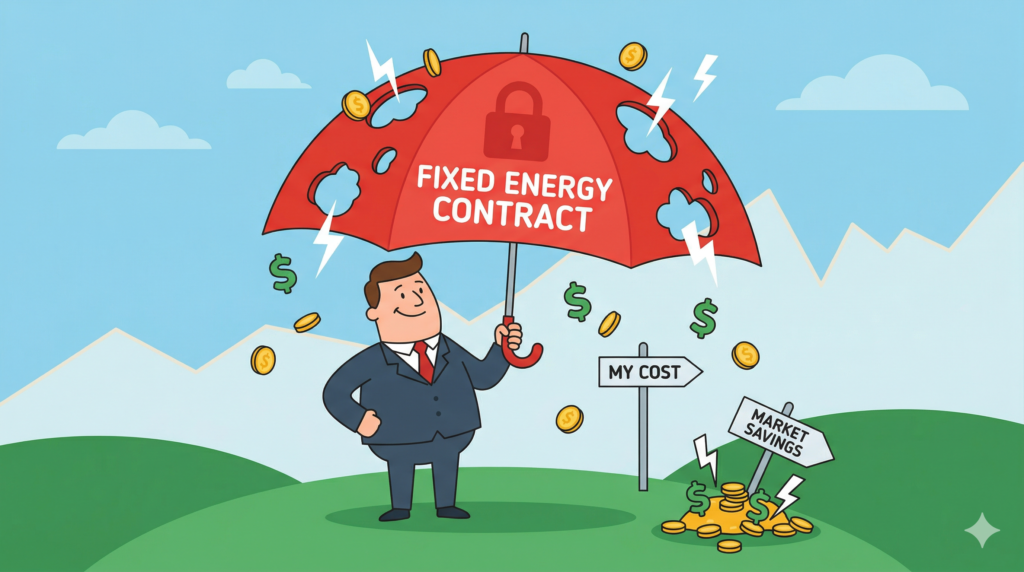
Subsidized plants must be looked at separately, where it is generally sensible to feed into the grid even at a zero price. For plants without subsidies, this limit is around 20 euros per megawatt hour, depending on the specific sales margin.
A smart solution turns a minus into a profit
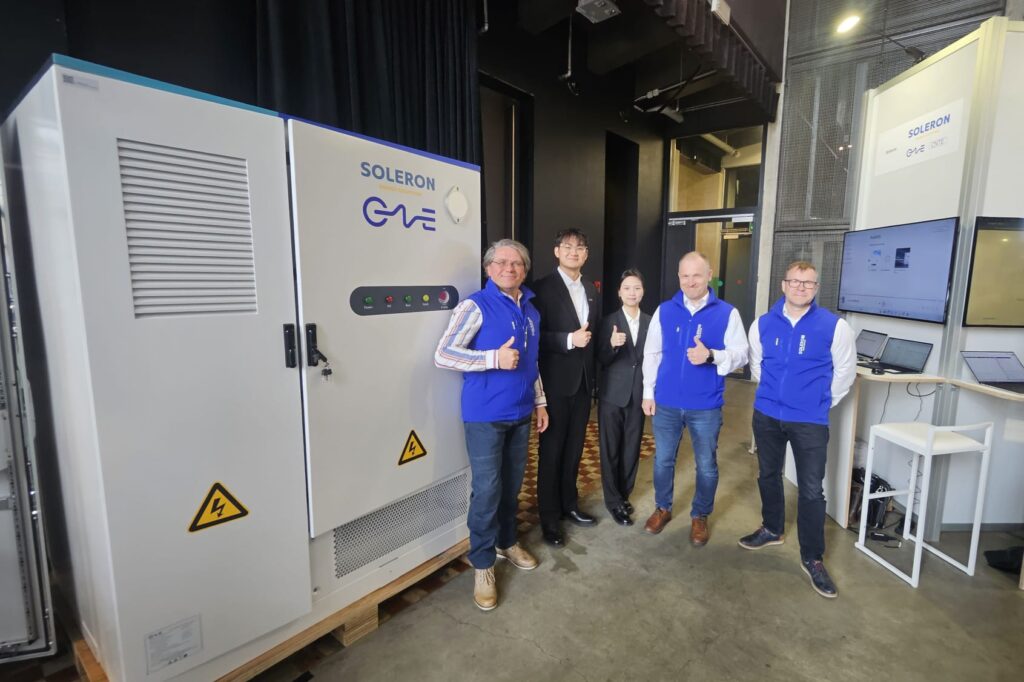
The solution lies in energy management and storage. Soleron management turns a passive plant into an active source of income. The operating principle considers market rules and acts accordingly.
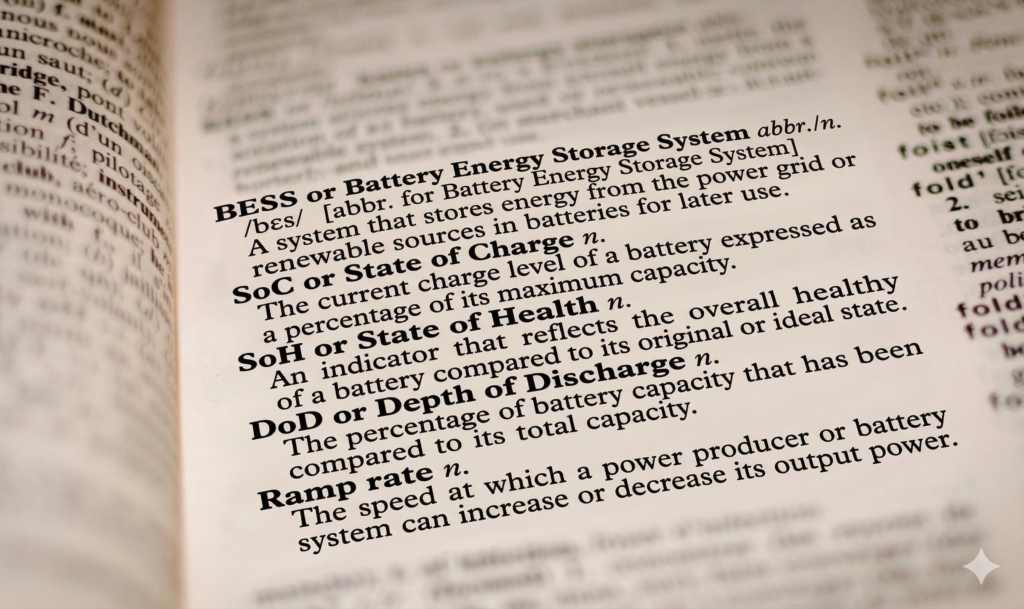
At the moment when there is a negative price on the market, the system automatically fully charges the batteries with electricity produced in the plant. If the exchange price is deep in the negative, it is worthwhile to stop production and charge energy from the grid instead. Later, when the electricity price is high again, the stored energy is sold at a profit.
The Soleron management software makes these decisions using algorithms based on artificial intelligence models. The system analyzes market data and forecasts in real time. Batteries also constantly participate in the frequency reserve market. If there is a shortage in the system, electricity can be sold at a profit by providing a regulation service.
Real financial example
Let us look at a calculation using a 100 kW solar park as an example. Suppose the market has a negative price of minus 50 €/MWh. A solar park without a battery turns itself off, and the revenue is zero.
The smart solution, however, makes an optimization decision. The system stores the plant production in the battery or buys more electricity from the grid if necessary. A few hours later, the price rises to 150 €/MWh. The system sells the stored energy to the grid and earns revenue. At the same time, the plant without a battery, operating while turned on, would have incurred a loss.
The new law that came into force at the beginning of the year also abolished the double taxation of grid fees, which makes the model even more profitable.
Conclusion: turn a passive plant into an income source
Negative electricity prices do not have to mean a financial loss for the solar park owner. With the right technology, this is an opportunity to earn revenue even when market prices fall below zero. If you want to understand how your business could benefit from negative prices, it is worth looking at your energy system as a whole: production, consumption, and storage together.
If you have questions about whether smart management is feasible in your company, contact us and we will find a working solution together.